
Oakland County Arrest Warrants Explained
An arrest warrant is a judge's command. It tells an officer to take a named person into custody over a charged offense. Probable cause backs it up. That means a sworn account of facts a reasonable person would credit, tying a real crime to this particular person. In Oakland County, a police agency or the prosecutor's office files the complaint. A district court magistrate or judge then reviews it for a misdemeanor, an ordinance matter, or the first stage of a felony. A felony that binds over continues in the Sixth Judicial Circuit. Keep the systems straight, too. A local charge and a federal one never share a court file.
Oakland County Warrant Review by a Magistrate
The warrant process runs in a fixed order in Oakland County, complaint first, review second. That order is why a police report alone is never the same thing as a warrant.
- A police investigation ends in a report and a proposed charge.
- The report goes to the prosecutor's office for charge review and a complaint.
- A magistrate or judge reviews the sworn affidavit for probable cause.
- The court signs an arrest warrant or issues a summons instead.
- The order is entered and validated before an officer serves it.
- The person is booked, arraigned, and given bond or release conditions.
Two statutes frame what happens next in Oakland County. MCL 764.1c governs reasonable-cause holds without a warrant, and MCL 600.8311 covers district court criminal jurisdiction, arraignment, bail, and probable-cause conferences.
Inside an Oakland County Arrest Warrant
The signed warrant itself is the paper with teeth in Oakland County. A public case screen may show only a slice of what that order says.
| Court and Case Number | Court-specific, such as 2025-123456-FH |
|---|---|
| Charged Offense | The crime, with the felony or misdemeanor classification |
| Warrant Type | Arrest warrant, or a summons where the court chose that route |
| Issue Date | The date the judge signed the order |
| Bond or Release | An amount and an accepted form, or a release condition |
| Status and Service | Active, served, returned, or recalled, plus the serving agency when shown |
Public systems in Oakland County often stop at the case event. Ask the court for the actual terms of the order.
Who Serves an Oakland County Warrant
More than one agency can execute the same Oakland County order. The sheriff's warrants unit validates and enters warrants from all fifteen district courts and the Sixth Circuit, serves them anywhere in Michigan, and arranges extraditions. City police can also execute a warrant inside their own jurisdiction. Serious and career fugitives go to the Fugitive Apprehension Team, which is federally deputized as a U.S. Marshal and works alongside the Marshals Service. Its published 2025 activity lists 353 fugitives picked up and 61 extraditions. Note: the serving agency cannot recall the warrant, so resolution always returns to the issuing court.
Serving Arrest Warrants in Oakland County
Service can happen at any lawful contact in Oakland County. A traffic stop or a court visit can turn into an arrest on an open order. Deputies can also plan a service at an address. A fugitive case may bring a task force to the door. Once arrested, the person is booked and brought before a judge or magistrate for arraignment. Bond or release conditions get set there. That appearance is a step in the case, not the end of it.
Sealed Charges and Oakland County Warrant Records
Not every Oakland County order is public. A sealed criminal file, a sealed indictment, or a protected investigative record can exist without showing in a case search, and a blank screen cannot rule those out. Michigan's court-record rule starts from open access unless a statute, rule, or order closes a record. On top of that, MCL 15.243 lets an agency withhold law-enforcement material that would interfere with a case or endanger someone. Ask the clerk which authority applies when something is withheld.
Comparing Arrest, Summons, and Bench Warrants
Three Oakland County court orders can each compel an appearance, yet none of them substitutes for another.
| Order | What Starts It | What Happens Next |
|---|---|---|
| Arrest warrant | A complaint supported by probable cause | An officer may take the person into custody |
| Summons | The same charging decision, without a custody order | The person appears on a set date |
| Bench warrant | A missed appearance or order in an open case | Arrest is authorized until the court recalls it |
A summons is the gentler Oakland County route, but skipping its date carries real consequences.
Federal Warrants and Oakland County Arrests
Oakland County falls inside the Eastern District of Michigan, so a federal charge belongs to the federal court in Detroit, not to MiCOURT. That court sits at the Theodore Levin U.S. Courthouse, 231 W. Lafayette Blvd., and its dockets run through an electronic filing system. Access is not free. PACER posts its fee schedule plainly: $0.10 per page with a $3 cap per document, $2.40 for audio files, and a $30 quarterly threshold for a fee waiver. Sealed events may not appear at all.
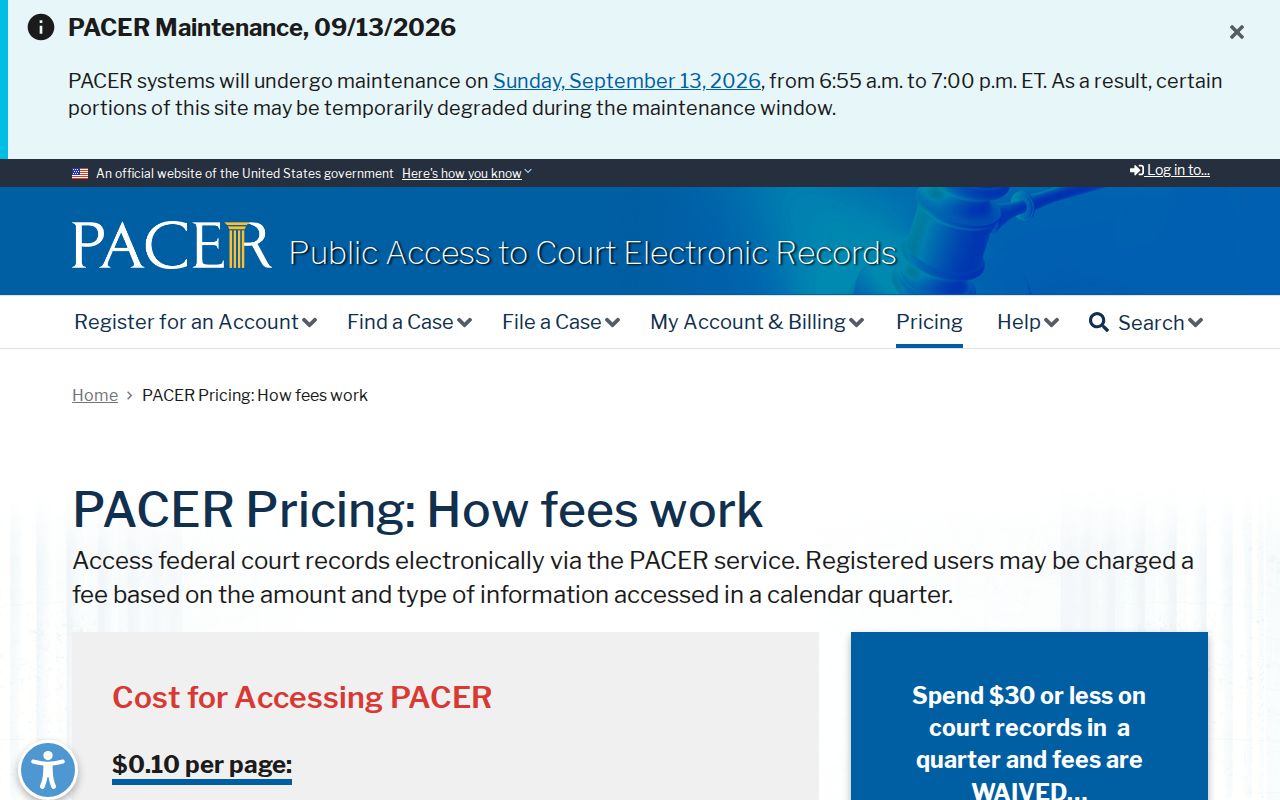
For a federal matter in Oakland County, use the federal clerk or PACER. The county court cannot recall a federal order.
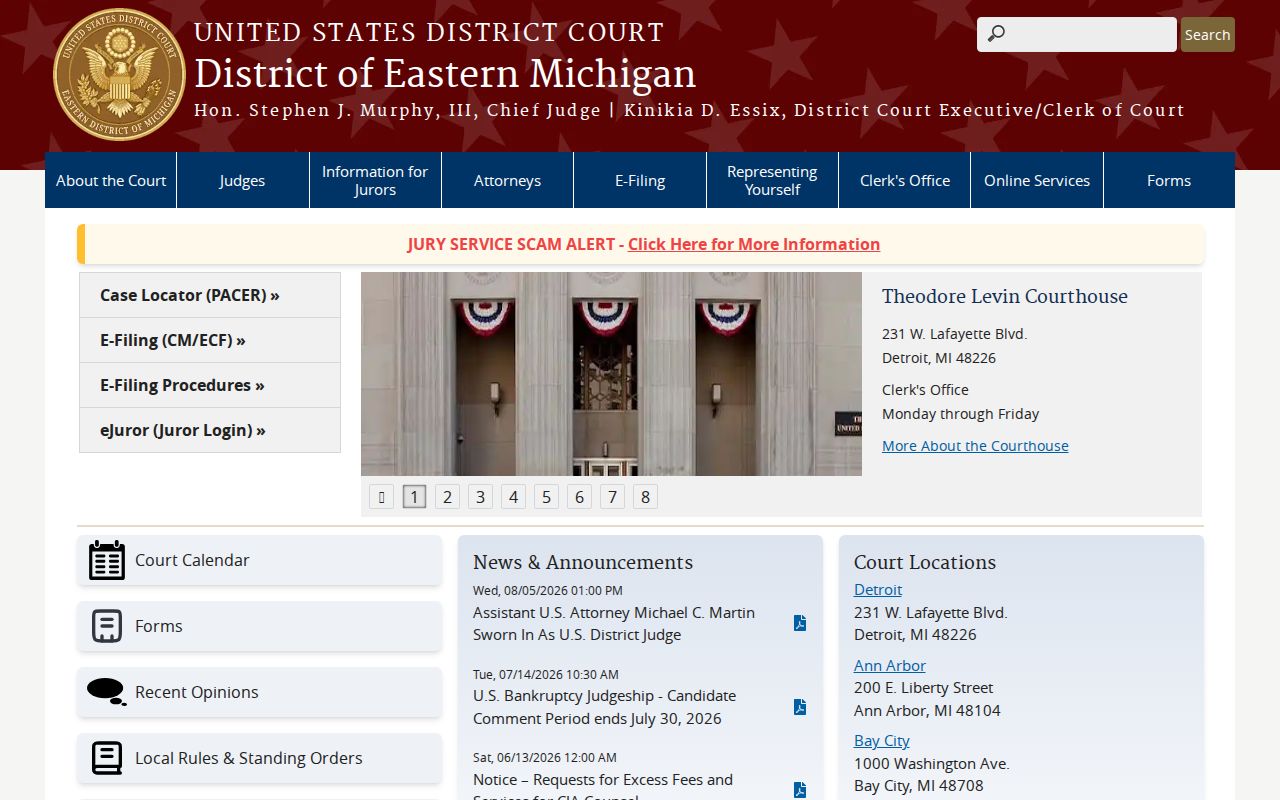
When a task force was involved, the U.S. Marshals Service district office stays a serving and fugitive partner in Oakland County. It is not a public warrant desk.
If There's an Arrest Warrant for You
An Oakland County warrant can be addressed before an officer acts on it. Michigan Court Rule 6.105 permits a voluntary appearance within a year of issuance for many bench and arrest warrants. The court can then arraign the person, or recall the warrant and set a future date. Assaultive and domestic-violence charges are exceptions.
Important: Call a lawyer and the issuing court before you appear. Ask about the walk-in time, the bond, and whether the court requires a motion to recall or quash.
Bring identification and the case number to the Oakland County court, plus any paperwork you already hold. Ask for a receipt or order before you leave.
Oakland County Warrants From Other States
An out-of-state warrant stays with the court that signed it, even if the arrest happens in Oakland County. Deputies here can hold the person. They then work through extradition. The Oakland County sheriff's Fugitive Apprehension Team handles those transports alongside the U.S. Marshals Service. Fixing the problem means calling the originating jurisdiction and a lawyer licensed there, since an Oakland County court that never issued the order has no power to recall it.