
Oakland County Active Warrants Explained
A warrant stays active from the day a judge signs it until the court closes it in some official way. Oakland County gets these orders from fifteen district court divisions, from the Sixth Judicial Circuit after a felony bind-over, and from the Family Division when support cases are at stake. Once signed, an order moves into the sheriff's system, where the warrants unit researches, enters, validates, and confirms each record before deputies act on it. Deputies can serve a warrant anywhere in Michigan. What the unit cannot do is end one. Recall, bond, and appearance terms rest with the court that signed the order, and no public list captures every active warrant in Oakland County. Any real warrant check ends with a call to the clerk of that court.
What Oakland County's Warrant Count Means
The sheriff's warrants unit carries a heavy load. Its 2024 annual report listed more than 31,000 warrants still needing research, entry, validation, second-party checks, or court confirmation. Another 10,427 warrants were handled that year in Oakland County.
Treat those as workload numbers for Oakland County. They count paperwork, not people currently wanted, and no list of that kind exists for searching.
How Oakland County Tracks Active Warrants
A warrant in Oakland County travels a set path. The judge signs it, staff enter and validate it, and a second check confirms the name, the charge, and the issuing court before anyone acts. Public traces of that work are scattered. A district court case may show a warrant event, a ticket search may show a balance, and the sheriff's most-wanted page may show a small selected subset. None of the three is the system of record. The full picture sits with the courts and the sheriff, so a status question still goes to the clerk. Note: a warrant does not expire just because time passed, so an old Oakland County case can still be active today.
Why Oakland County Warrant Lists Lag
Public screens in Oakland County update on their own schedules, and some warrant categories never appear at all. That gap is why a clear list is not proof that no warrant exists.
- A newly issued warrant may sit in the court file before it reaches a public case view.
- Sealed matters, juvenile records, and protected investigations stay out of the public system.
- Support warrants live with the Friend of the Court rather than a district court.
- A case filed outside Oakland County will not appear in an Oakland search.
When a screen looks clean, call the Oakland County court that would hold the case. Ask a person, not a portal.
Inside an Active Warrant Record
What you can see depends on the system that holds the record. Treat each field in an Oakland County warrant entry as something to confirm, not a settled fact.
| Case Number | Court-specific, such as 2025-123456-FH |
|---|---|
| Warrant Type | Arrest, bench, family support, or civil process |
| Issuing Court | The district division, the Sixth Circuit, or the Family Division |
| Charge or Obligation | The offense, ordinance, or support duty behind the order |
| Bond | Amount and accepted form, set by the court |
| Status | Active, recalled, served, returned, or cleared |
Oakland County Warrant Status Vocabulary
Two people can describe the same Oakland County case differently when they use different words. Match the term to the record, not the other way around.
- Active
- No recall or closure is recorded.
- Recalled
- The court withdrew the order.
- Quashed
- A judge invalidated it, so ask for the order.
- Served
- An officer carried it out, which does not close the case.
- Returned
- Service paperwork came back to the court, with a court-specific meaning.
- Cleared
- The record shows nothing outstanding, pending court confirmation.
- Bond forfeited
- The court acted on the release security after a missed date.
Warrant Roundups and Most-Wanted Lists
Oakland County's most-wanted program is a curated public-safety list, not a register of every open warrant. The sheriff's office maintains it at OCSO Most Wanted Fugitives. An entry there may carry a name, a photograph, descriptors, a last known location, and a charge summary.
Key Point: That page is a tip program. Tips go to 1-888-TURN-1-IN, and a curated roster is never the full list of Oakland County outstanding warrants.
Oakland County runs no county-wide amnesty week or warrant roundup. The ordinary court route, appearance and recall, is the path to resolution.
Oakland County Warrants in the Sheriff's App
The sheriff's mobile app gathers public resources in one place and links to the most-wanted page for Oakland County. It does not open LEIN. It does not turn a phone into a warrant terminal. The app routes you to programs, while the court confirms your case, and that distinction matters when one search tool starts to look like it covers everything.
When Your Name Is on the Warrant List
Finding your own name in a public Oakland County program is unsettling. Treat it as a prompt to act, not to wait. Clearing an Oakland County warrant starts with an attorney and the issuing court. The home page walks through voluntary appearance, bond, and recall in order.
Important: Contact the court and a lawyer rather than the tip line. The tip line takes information about listed fugitives, and it cannot confirm or clear your own record.
Get the proof that matters at the end: a court result, a receipt, or a recall order. Ask the Oakland County court for it in writing.
When Oakland County Warrant Records Disagree
A court screen, a sheriff record, and a ticket portal can disagree about the same Oakland County case on the same day. When they do, the issuing court wins. It holds the order and controls the recall. For a sheriff-held file, request a defined document rather than a list; the OCSO records unit can be reached at 248-858-5011, and the county routes formal requests through its FOIA Request Center.
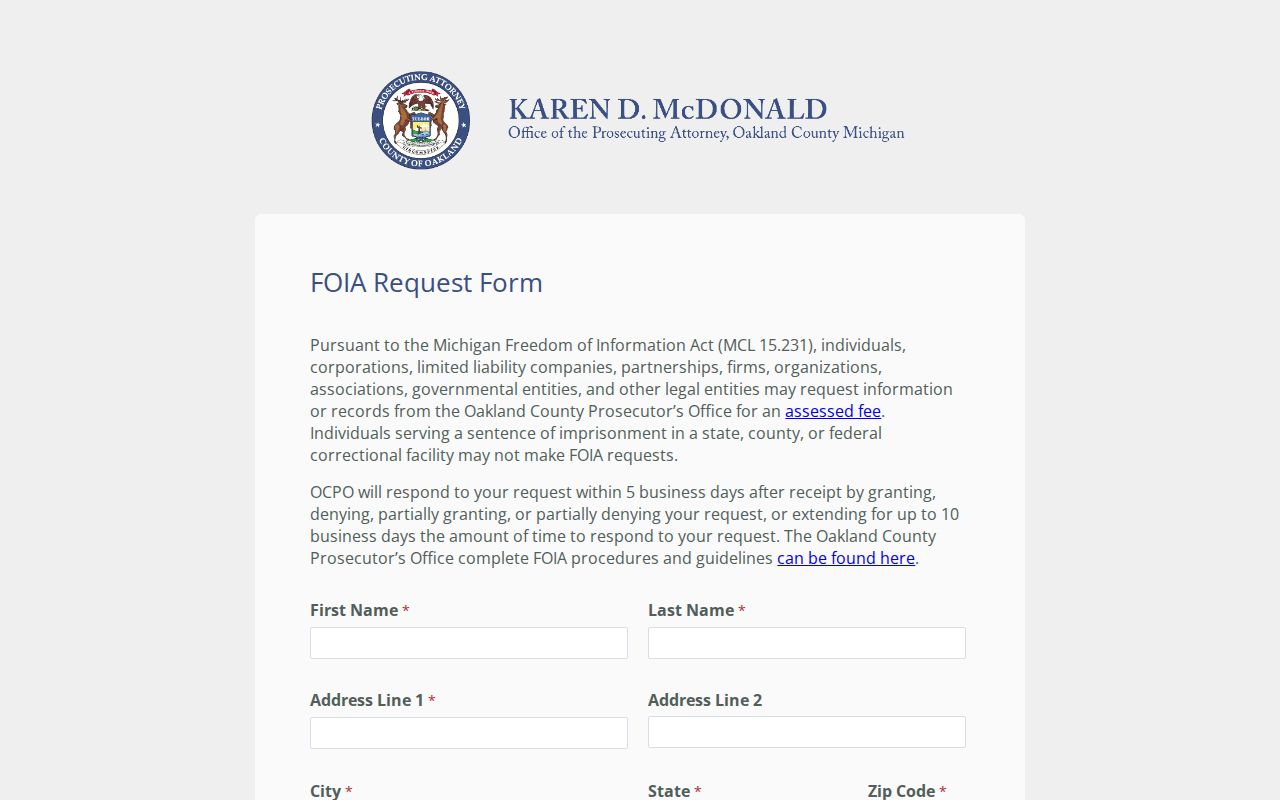
A narrow request tied to your own Oakland County case, with the court and case number attached, is easier for an agency to answer. A request for every outstanding warrant in the county is not.